Ureshino kamairi matcha — forty years of the craftsman's eye, and a harvest worth waiting for
Steaming dominates today, yet only three makers in Ureshino still pan-fire their matcha. A field note from a visit to a master who has watched the balance of moisture and heat for over forty years — and called this year the best in three decades.
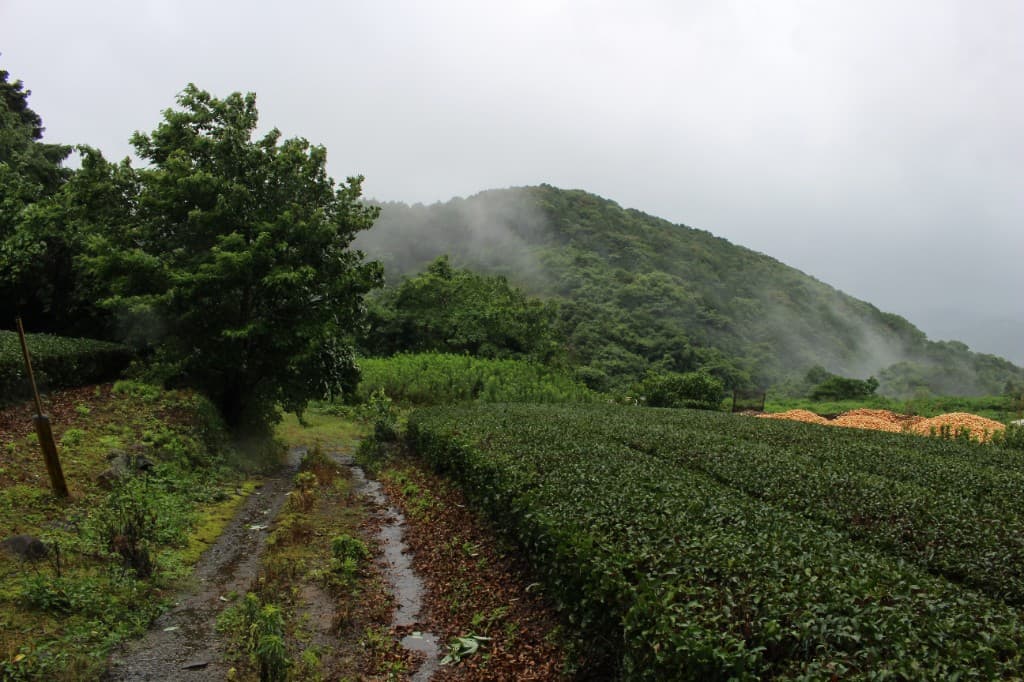
In June 2026 we visited a tea garden in Ureshino, Saga. What Shojuen values is not only packing matcha into a bag and shipping it. We document the intent of the people we meet, and deliver it as it is — in words and photographs. Today, as a first step, we walked the ground where pan-fired (kamairi) matcha is made.
With steamed matcha now the norm, matcha finished by pan-firing is a tiny niche even within Japanese tea. Even in Ureshino, only three makers still produce kamairi matcha — a rare line nationwide, the third-generation master told us.
Two municipal research stations are said to be trying pan-firing based on this master's methods. There, though, lowering the heat to bring out color means dullness and harshness never quite clear. Here, by contrast, by staying glued to the pan and constantly working the balance of heat and moisture, he overcomes exactly that — an original flavor, we were told, that only a craftsman who has studied the balance of moisture and fire for over forty-three years can reach.
The hardest part of kamairi matcha is moisture. You draw moisture from the leaf while firing it in the pan, then fire and stir it further on an iron plate. Draw out too much and it turns bitter; too little and it stews and goes vague. We had heard before that it took seven or eight years to perfect — and today the drying floor came into far clearer view.
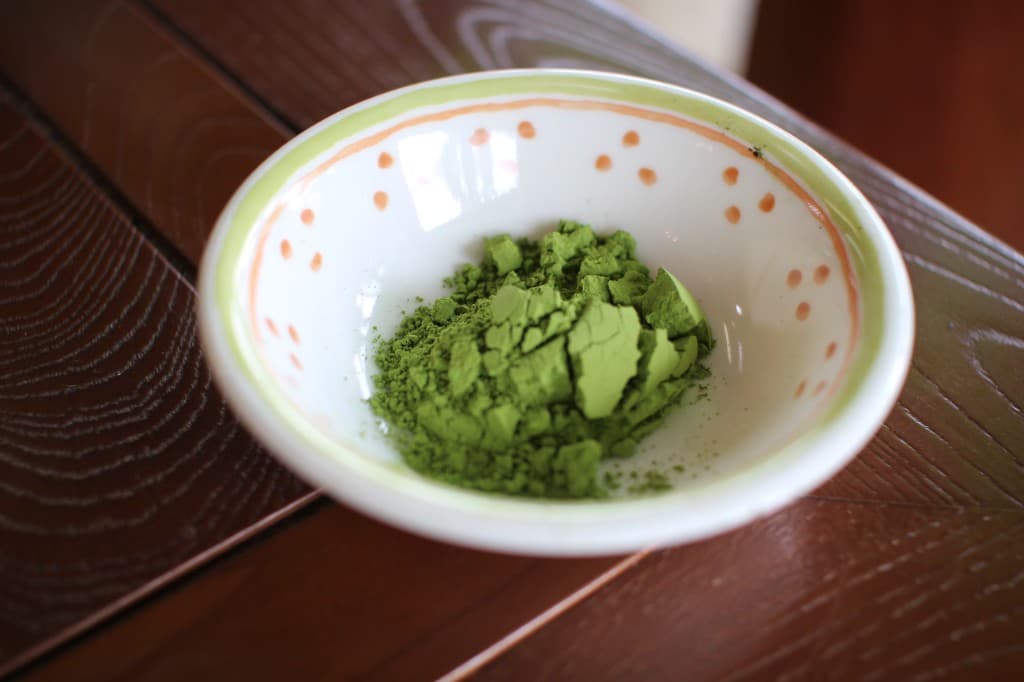
Flavor changes during drying, too — and so the craftsman's eye stays fixed on it, using the dryness of the stems as a guide. There are automated drying lines in Yame, he said, but here everything is judged by his own eyes. Not leaving it to machines, but reading the leaf moment by moment: that, we felt, is what forty years builds.
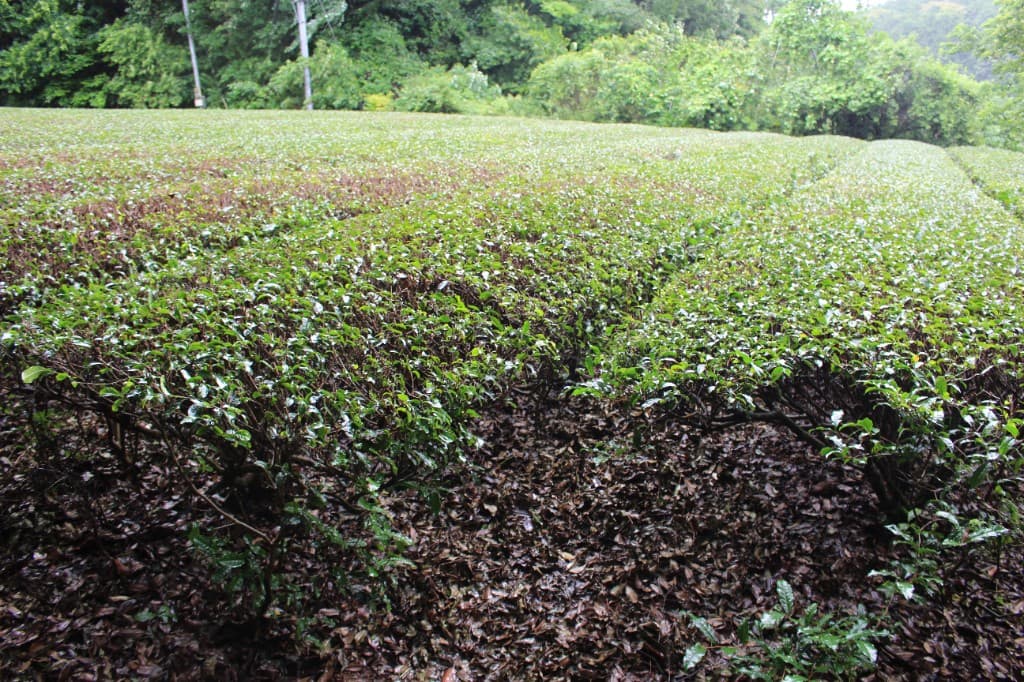
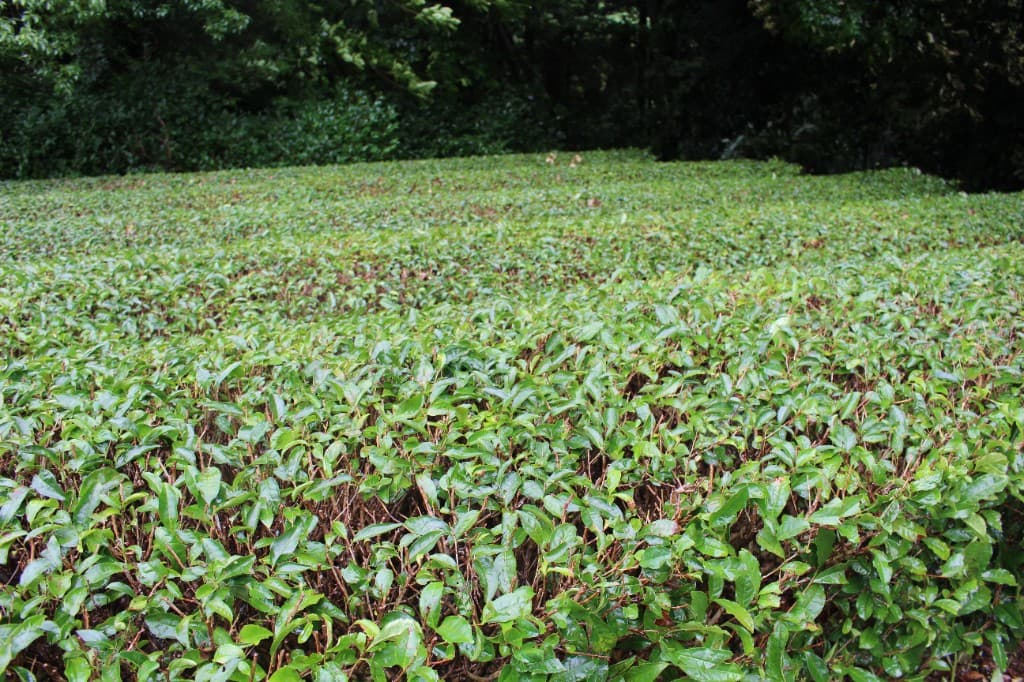
For cultivation: Yabukita, shaded for twenty days; organic inputs of rapeseed oil cake and oyster shell. Shading nets stretched over the garden, and rows mulched with fallen leaves ran on. In the misty hills — a landscape so like Ureshino — we listened at length about this year's harvest and the tea.
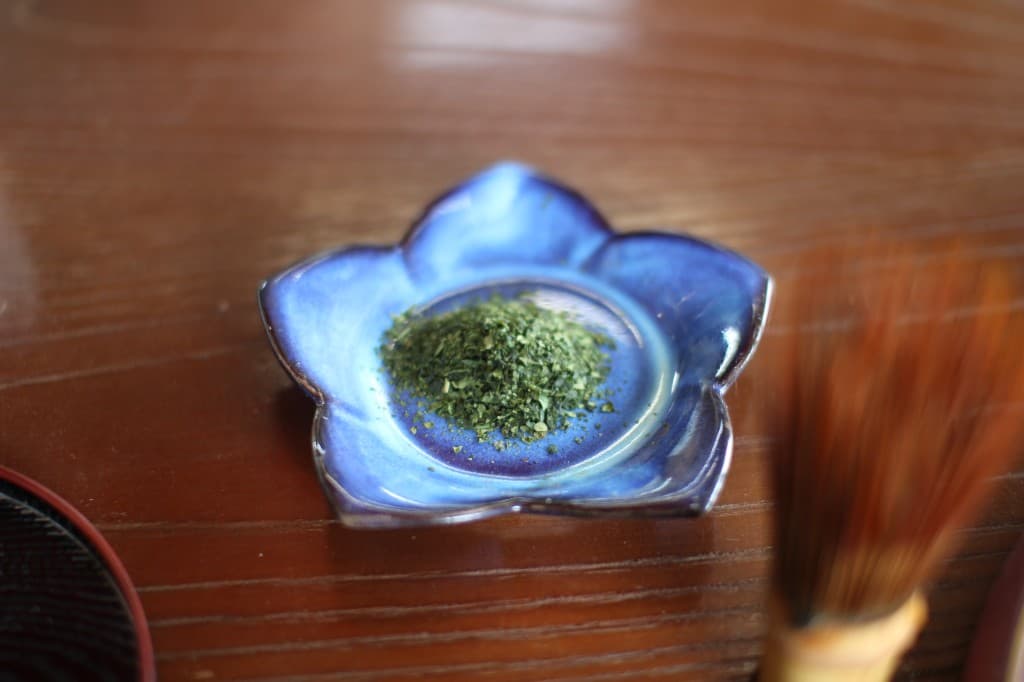
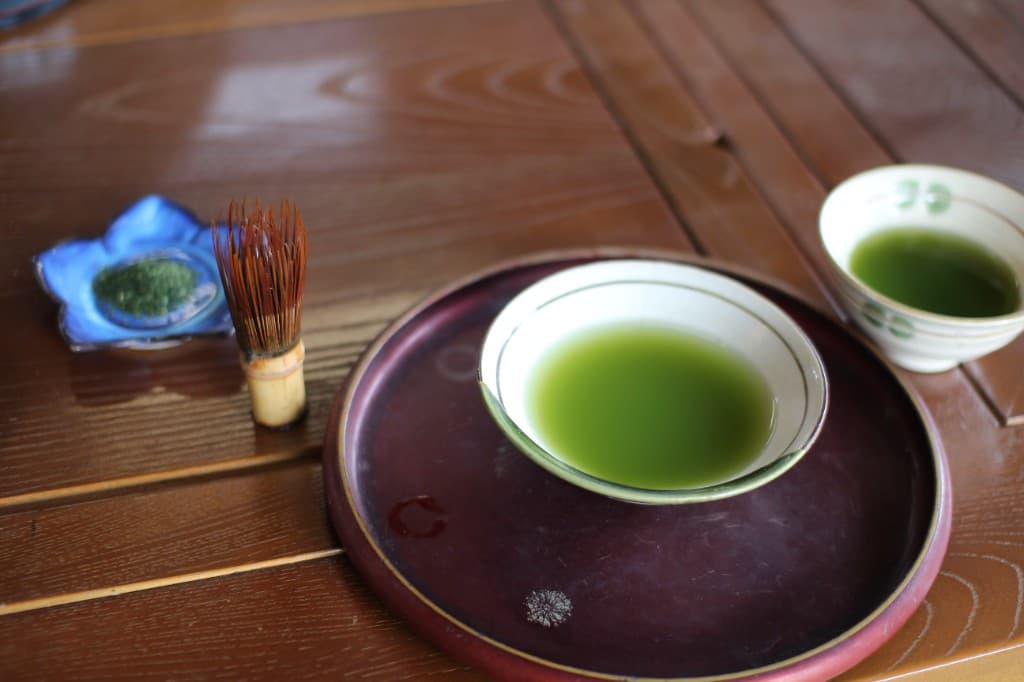
And this year's kamairi — the best in thirty years, we were told on the spot. The color in the bowl, the vividness of the powder, the clean finish. The cup we recorded is a way to feel those words for yourself.
Ureshino's kamairi is not a tea that competes as "top-grade steamed matcha" in the thin-tea seat. For everyday lattes and for cooking — a matcha made to be used, that sits lightly even with richer milk. That is why Shojuen carries this line. Products: Yukikaze, Kanon, Jakuro, Matsuju Moga, and more. For wholesale or questions, see Contact.