Saga pottery and an Arita workshop — a field note on matcha bowls
A field note from our visit to a kiln making Arita ware in Arita, Saga, as Shojuen prepares to offer matcha bowls — Arita ware set among Saga's porcelain traditions of Imari and Hasami, and the kiln owner's view of ware as color in daily life, with the story of the pieces named 2020 and 2021.
We are preparing to offer matcha bowls at Shojuen. Saga is one of Japan's foremost ceramic regions — Arita, Imari, and Hasami are known for porcelain; Takeo ware spans both stoneware and porcelain. Different names, but each carries long history and deep skill. For matcha bowls, we chose to work with a kiln making Arita ware in Arita, Saga.
Arita ware centers on Arita Town in Saga — among the origins of Japanese porcelain from the 1610s, a nationally designated traditional craft. Imari ware is historically the name for porcelain shipped abroad from Imari port; most pieces came from Arita and nearby kilns — less a separate technique than a trade name. Hasami ware, in Hasami Town, Nagasaki, shares the same porcelain lineage; since the Edo period it has been known for high-volume daily wares. Takeo ware is local ceramics in Takeo City, with over four hundred years of history and more than ninety active kilns making both porcelain and stoneware.
The kiln we visited makes Arita ware in Arita, Saga — specializing in flower vases while also making hand-thrown matcha bowls and tea utensils, a daily workshop still producing everyday vessels by hand. Arita and Imari porcelain were exported from the Edo period onward, among Japan's defining ceramic exports. Carrying that dignified porcelain lineage, the kiln delivers vessels made to be used in daily life — in Saga, the history of export porcelain and the making of everyday ware live side by side.
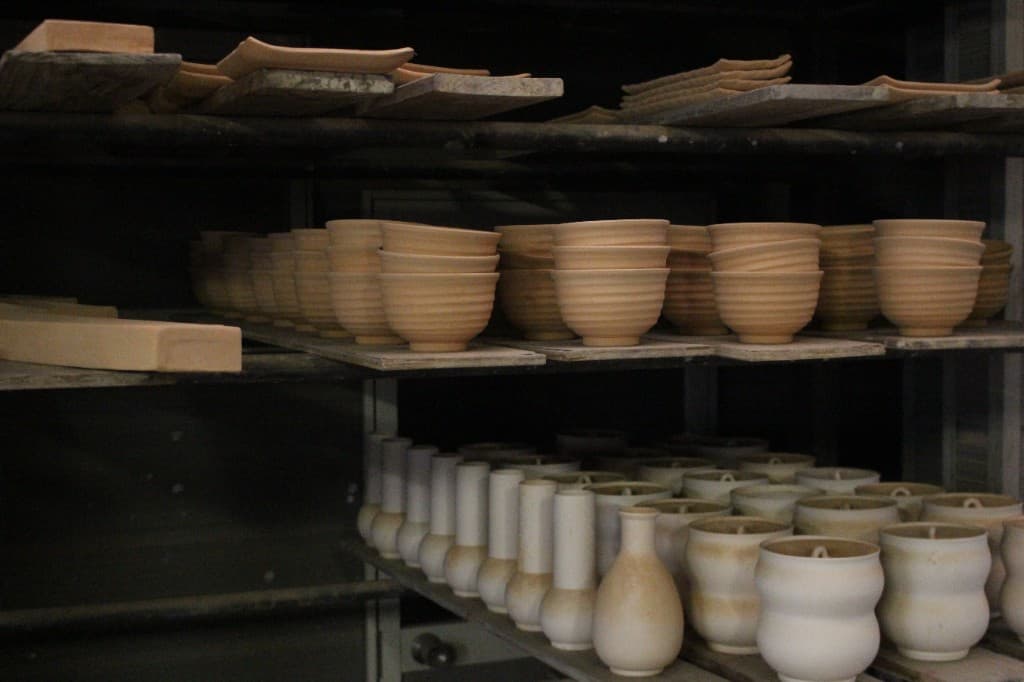
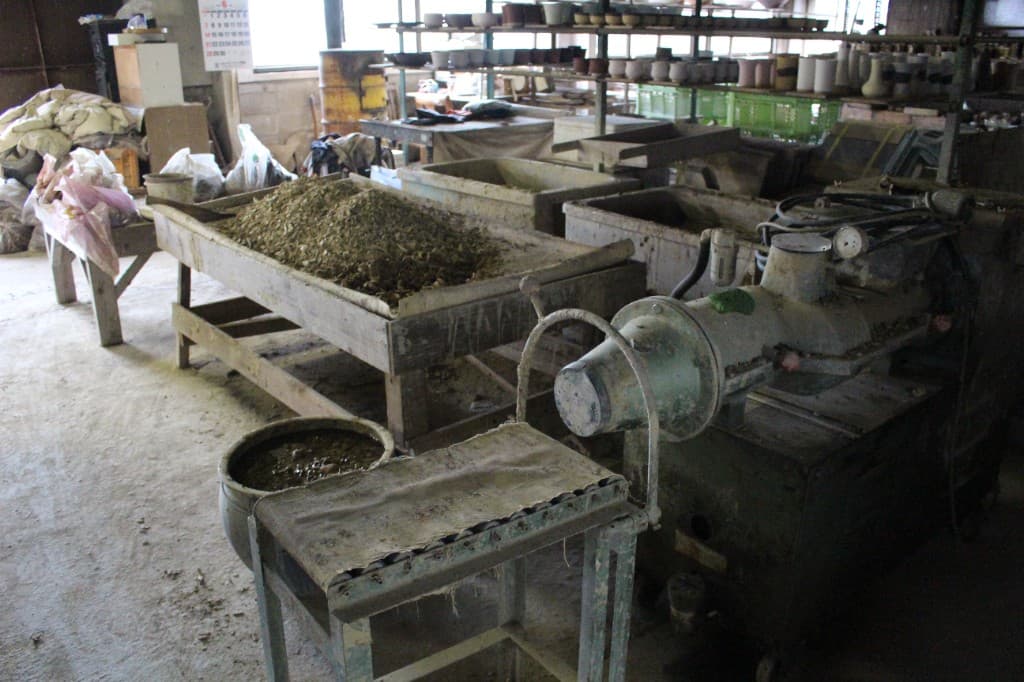
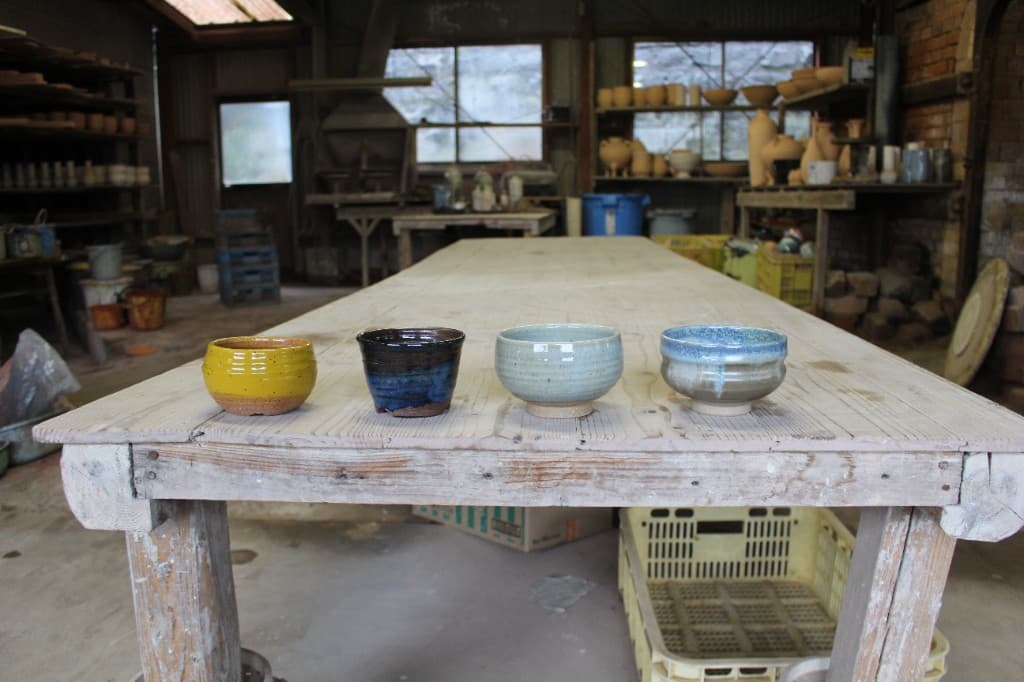
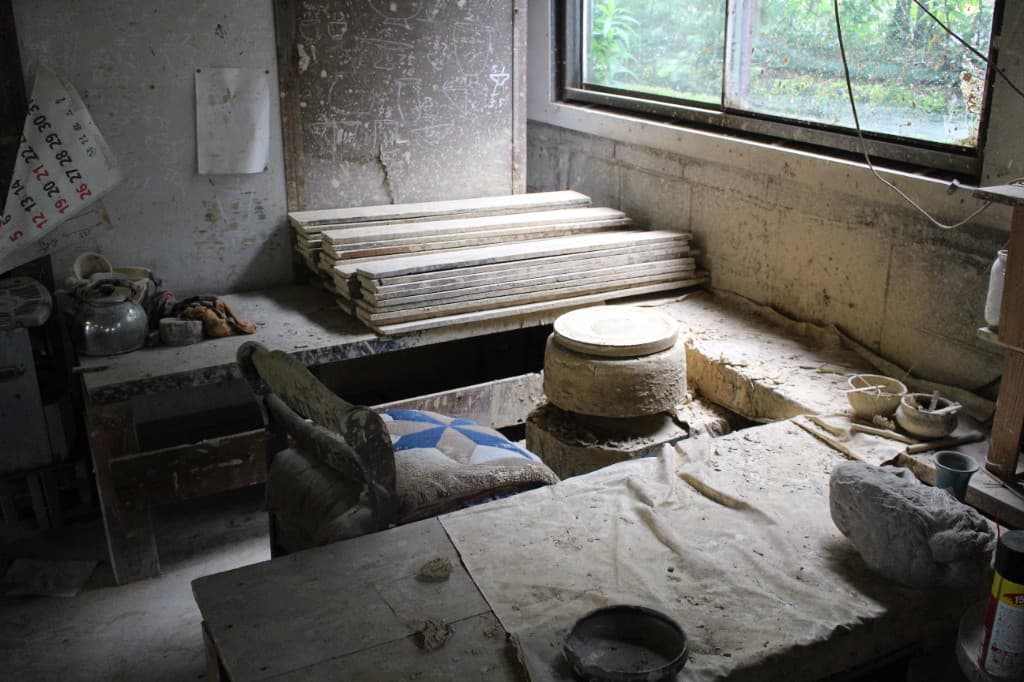
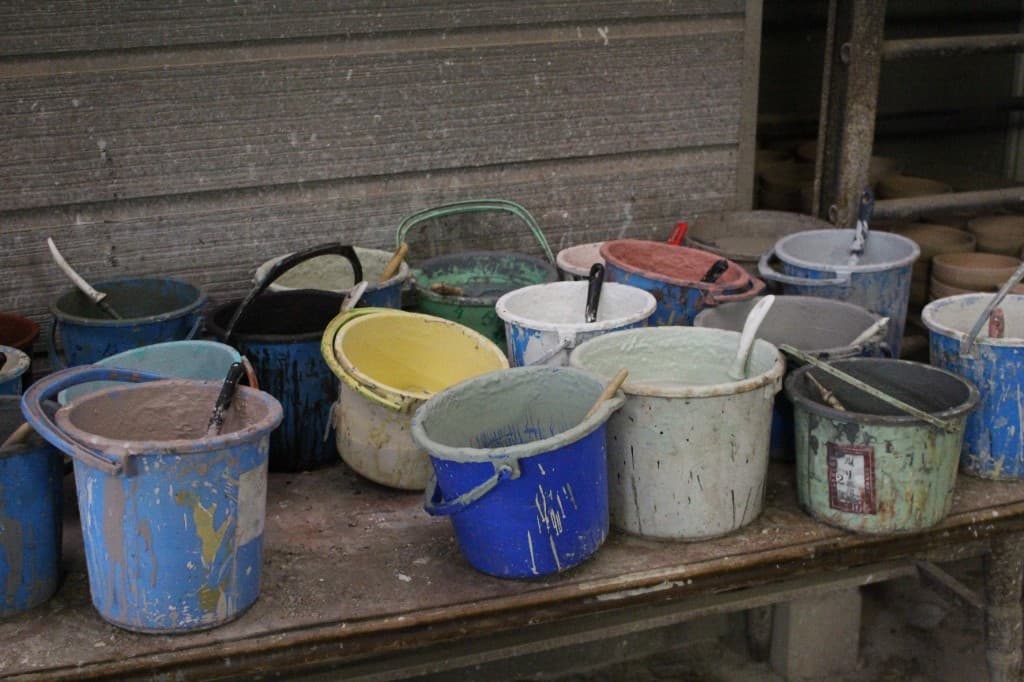
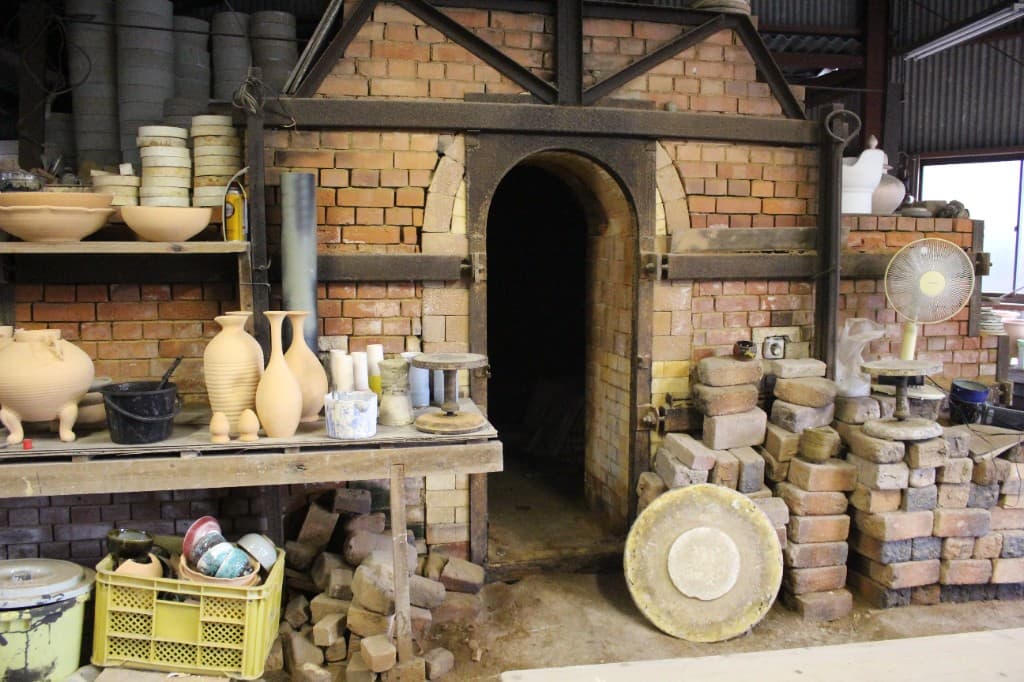
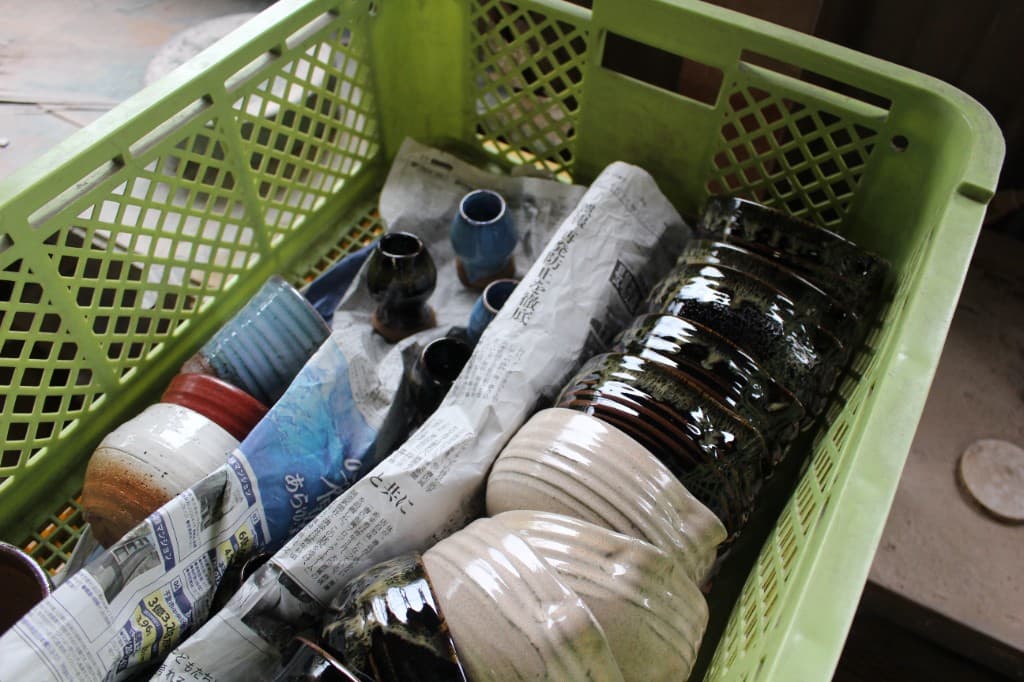
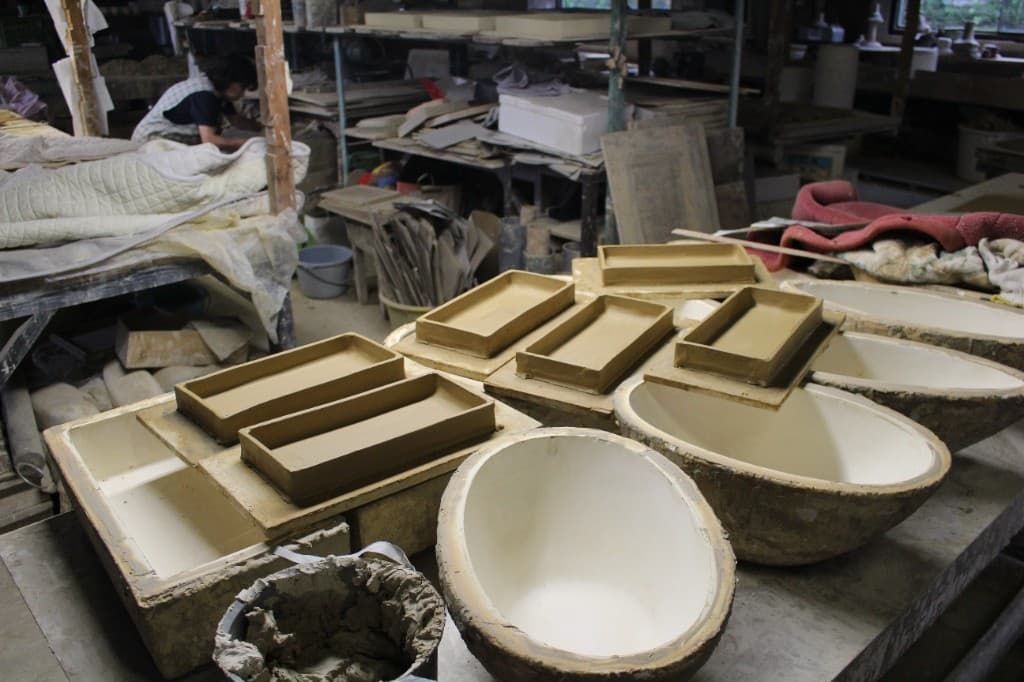
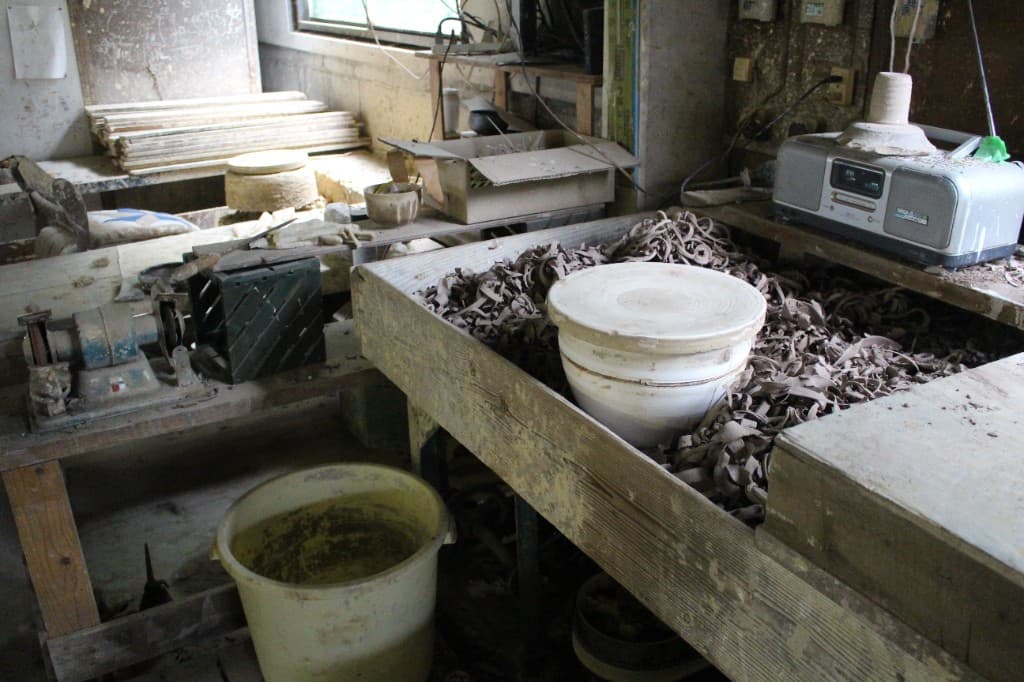
When we arrived for the interview, the kiln owner welcomed us warmly. He and his wife now run the kiln together. They exhibit at events nationwide — the Himeji Pottery Festival, the Hasami Pottery Market, and others. Inside the workshop: wheels, glaze buckets, the kiln, shelves of bisque bowls — a calm space where the maker's handwork is still visible everywhere.
Asked about his work, he said: 'Making pottery is enjoyable. I'm grateful when people use what I make.' He told us he avoids the fixed idea of the 'artisan's masterwork,' doesn't stand on pride as a craftsman, and lets many people pick up his pieces — thereby giving pottery value as a product.
Hearing him, I felt how fine it is to see pottery as a product that adds color to daily life, not only as a lofty, untouchable artwork. Even costly, exclusive pieces mean little if no one ever sees them — that outlook seemed to reflect the owner himself.
One episode showed his character clearly. A woman visited with a child of four or five. When the child chose a piece to buy, he joked: 'In a year, break it — then you can come buy another. Then you can come see me again!' — using the familiar nickname he calls himself around children. Pottery is consumable in a sense, yet people rarely replace it unless it breaks — knowing that, he said it lightly, in jest.
The child took him seriously, eager to see him again — the potter the child called Ojichan, after that same nickname — and really tried to break it — but couldn't. The child named the piece '2020' and hung it on the wall. The next year they came to tell him they had come to buy the '2021' piece — and he teared up hearing it. It shows how he values human connection above all; pottery exists for that bond, yet he also honors the vessel itself. Shojuen, too, connects people through trade; products are the means. So it matters not only to exchange money, but to put feeling into what we sell — I felt that again.